ayshaquinn.com ayshaquinn@gmail.com
Reflections
(Venetian Light on Water)
A continuous video/audio projection loop by Aysha Quinn, with sound design by Sašo Fajon.
Aysha Quinn is a pioneer video and performance artist, originally emerging from the Southern California eco-feminist performance genre in the mid-’70s, and has continued to create throughout the advancement of the video medium.
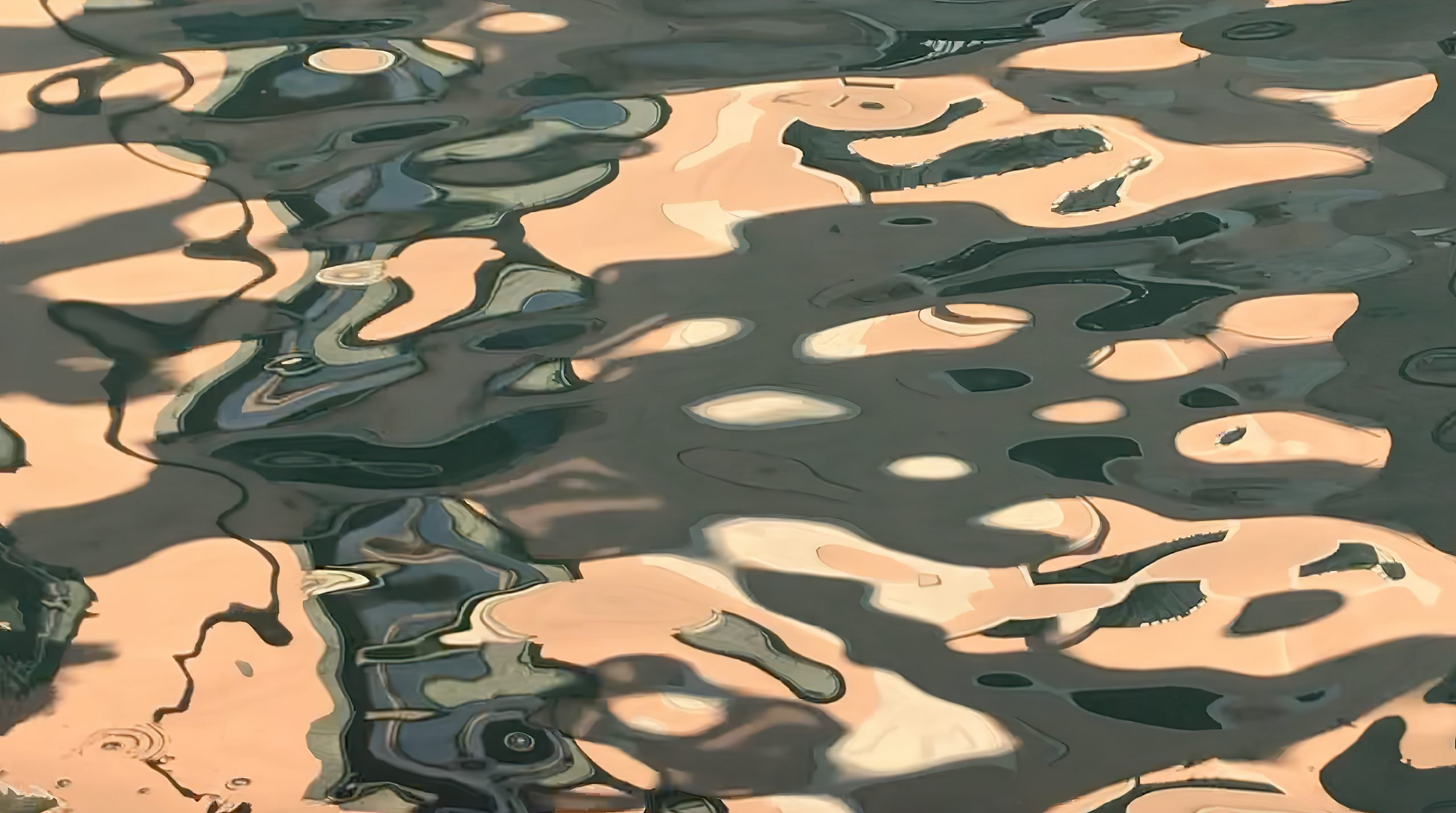
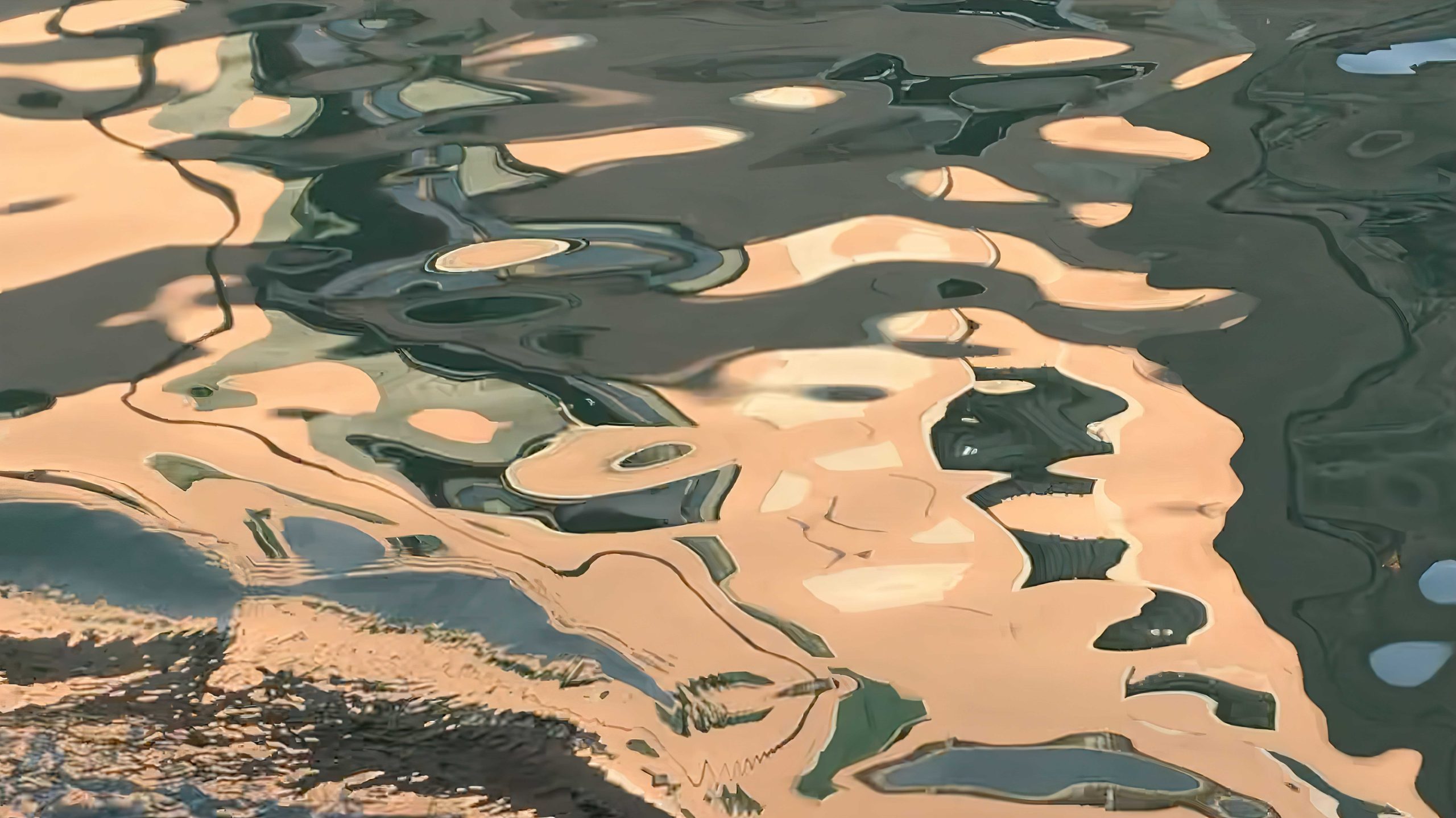
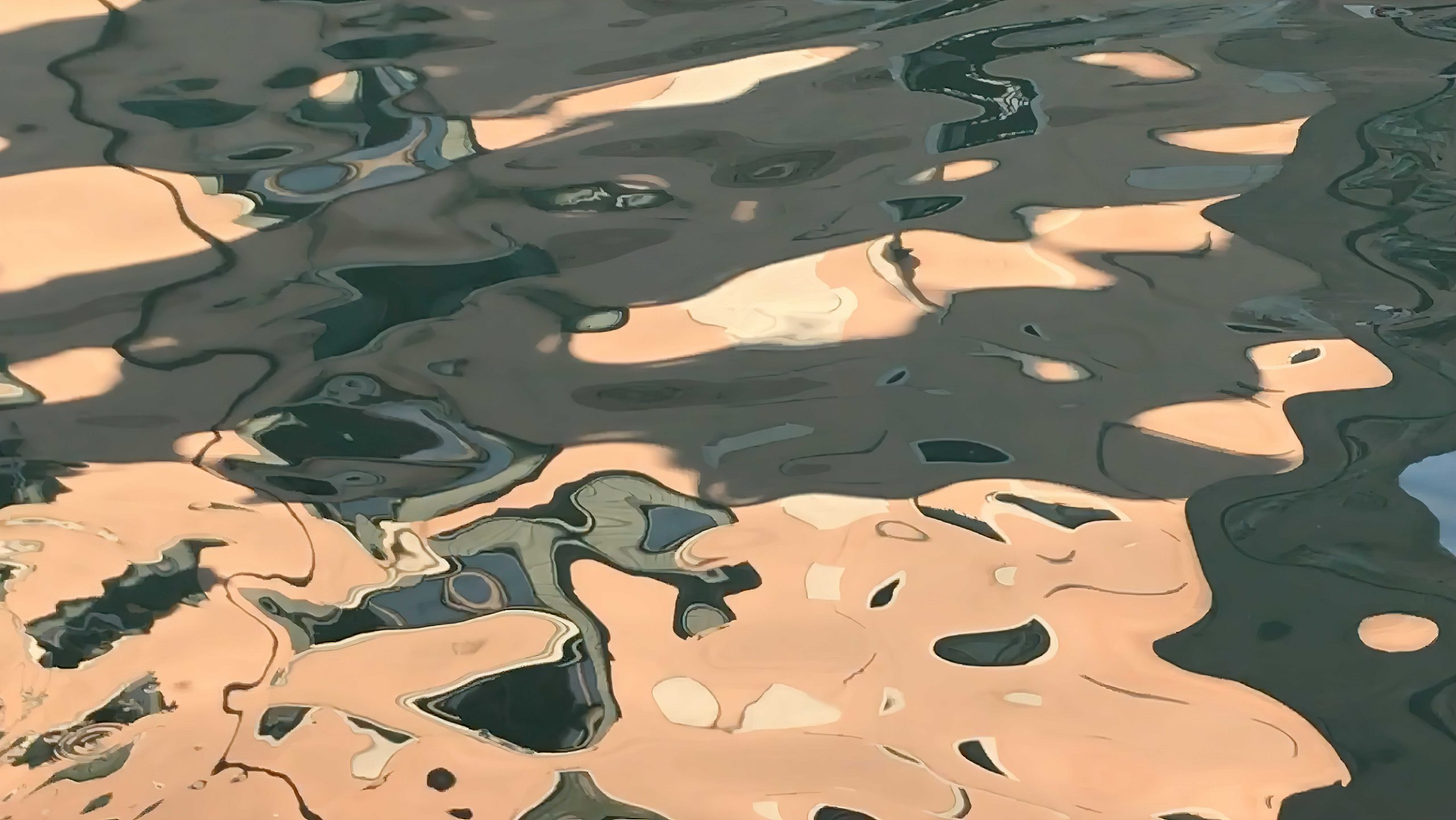
Blending experience and perception, Reflections holds a unique space at the intersection of documentary and abstraction. The digitally recorded view of a serene, natural environment is no longer untouched but captured and manipulated by technology, changing its original form and giving it new contexts.
Artist Statement: This piece represents the dichotomy of an endangered planet and a vast technologically advancing digital landscape, the division between them, and attempts to reconcile them as one. This piece touches on themes in my work that have transitioned throughout the years yet still remain apparent. In plain-speak, during these times of chaos and separation from the natural world, we seek to engage via technology. (See No Earth, No Earth Station L.A. Country Museum of Art, 1983 and 2nd Intermedia Arts Festival, Univ. of Iowa, 1982 – https://ayshaquinn.com/video-artist/no-earthno-earth-station-1982-83/)
Reflections began during an Emily Harvey Foundation residency in Venice, Italy. I was seeking rising water to be used as a metaphor for emotions. . . . then the light captured my camera. The tranquil, lapping water illuminated by the sun mesmerized me with its abstract, moving shapes. The imagery is also something of a living Rorschach test that the viewer can project onto. The original audio had constant intrusive tourist sounds so Slovenian musical artist/composer, Sašo Fajon, worked with me and created an immersive, quiet Venetian lapping water soundtrack with beautiful open-air ambiance.
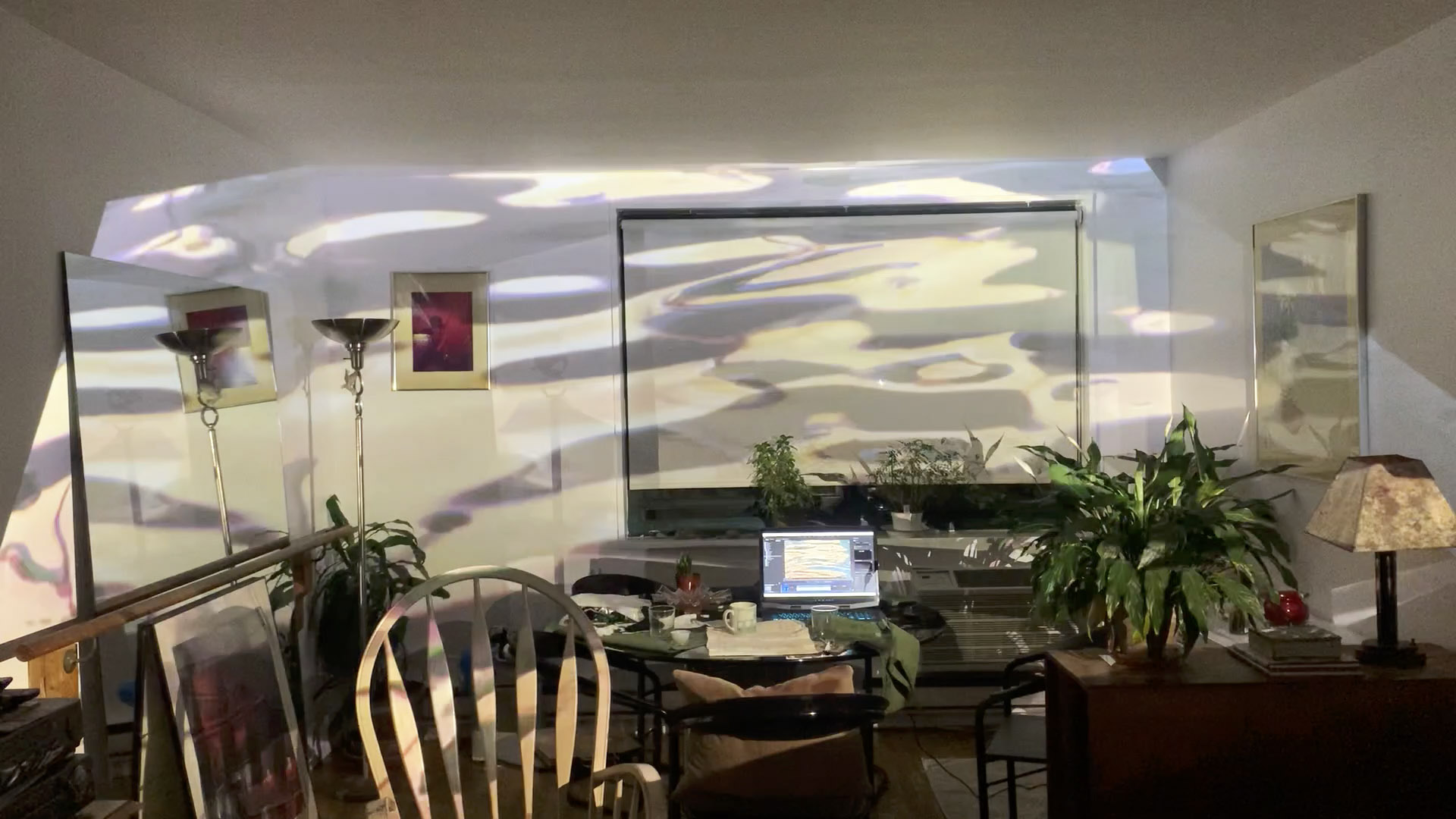
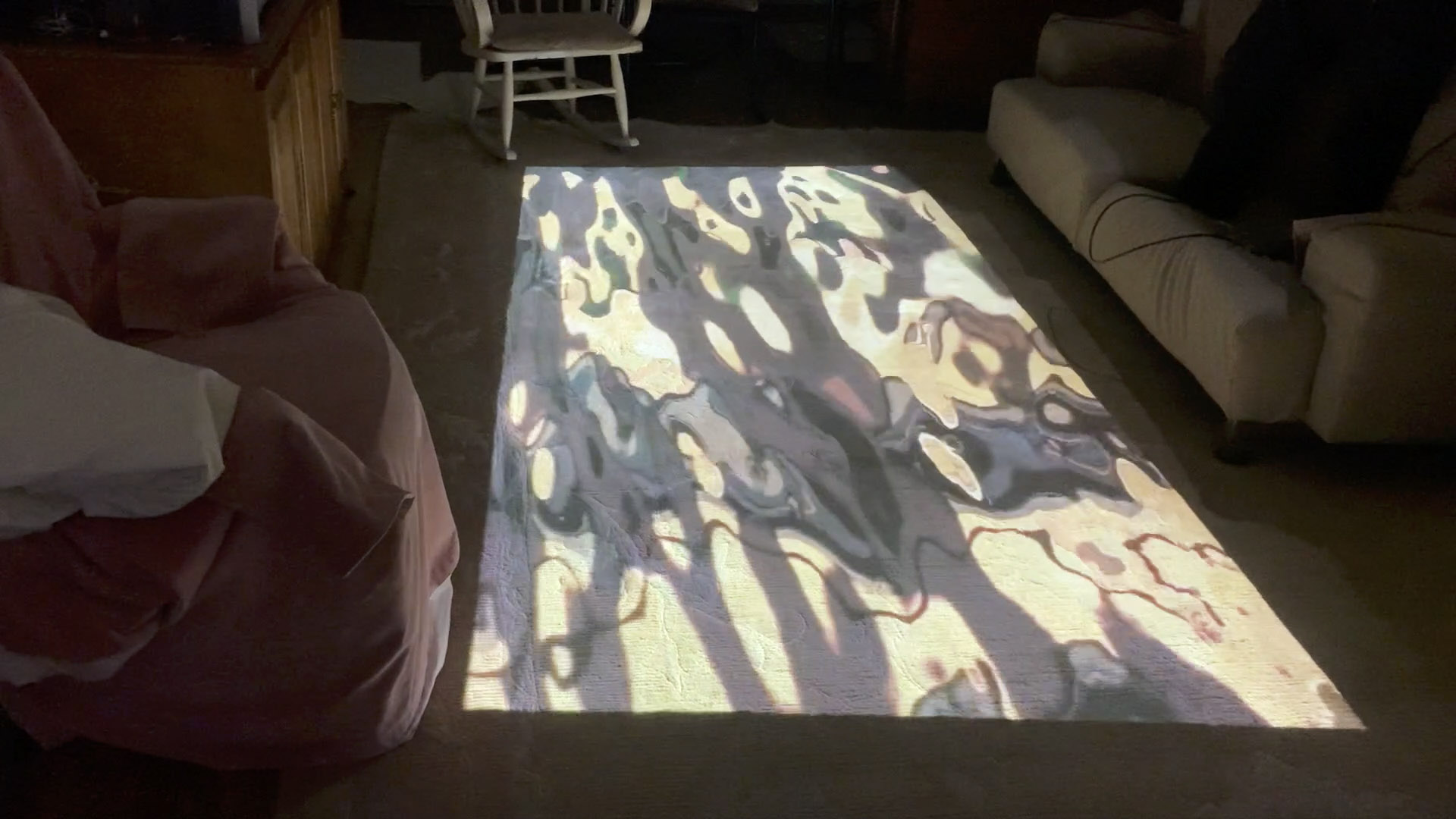
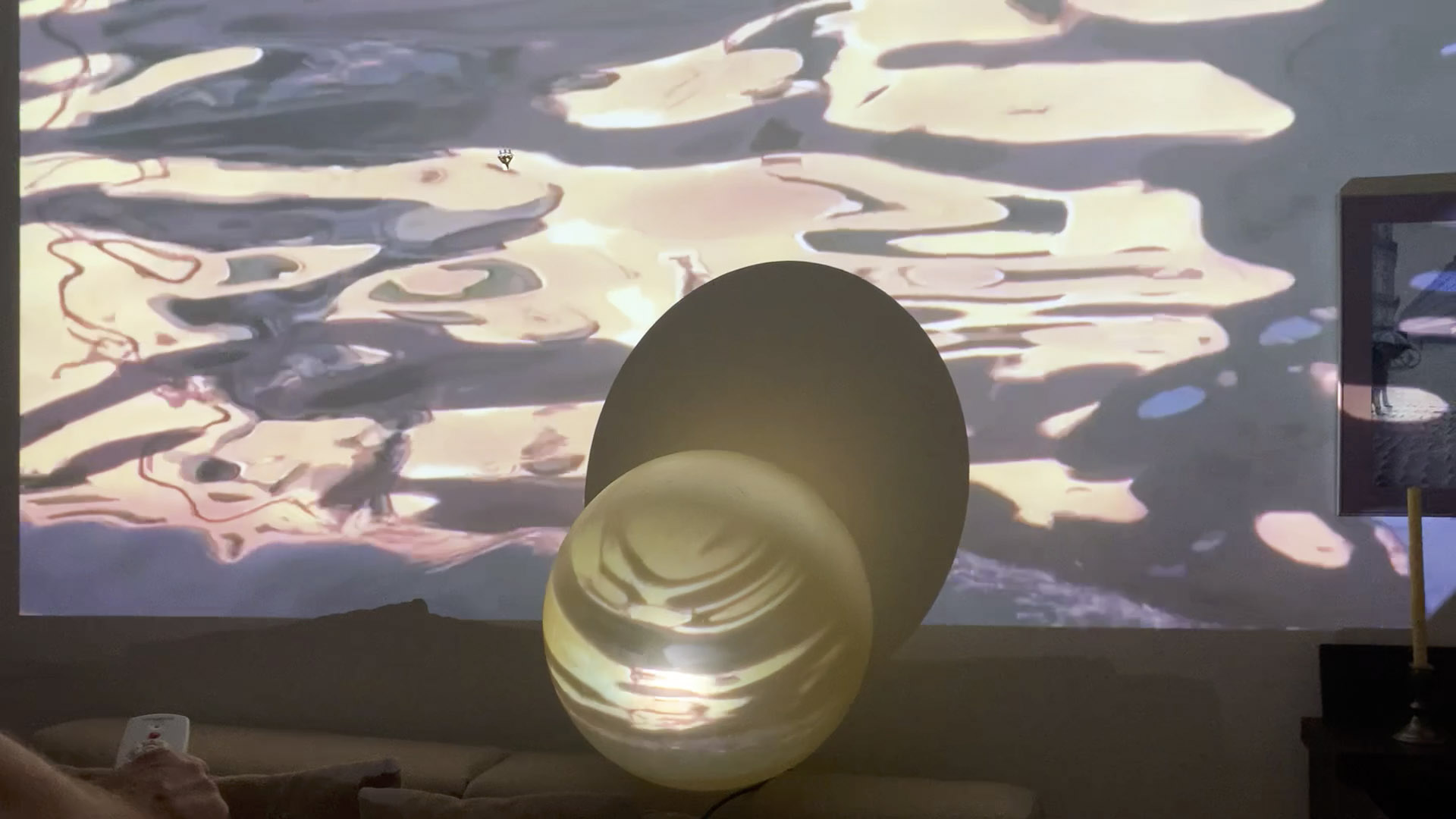
The display aspect is flexible, with options of projecting onto a wall or floor, mapping it onto various three-dimensional objects, or can be otherwise modified to adapt to the space. If projected onto all walls, it would be immersive. If on the floor, viewers could walk around it, or, if it’s put through projection mapping software to make it interactive, viewers could walk on/ through it and affect the graphics – change the playback speed, coloration, zoom in/out of video – it could sense a person’s position and/or body movement and accordingly affect the graphics.
Image and Video List
Reflections (9 min. clip)
Please press play to start the video